_edited.jpg)
When Scaffolding for Roof Repairs Is Needed

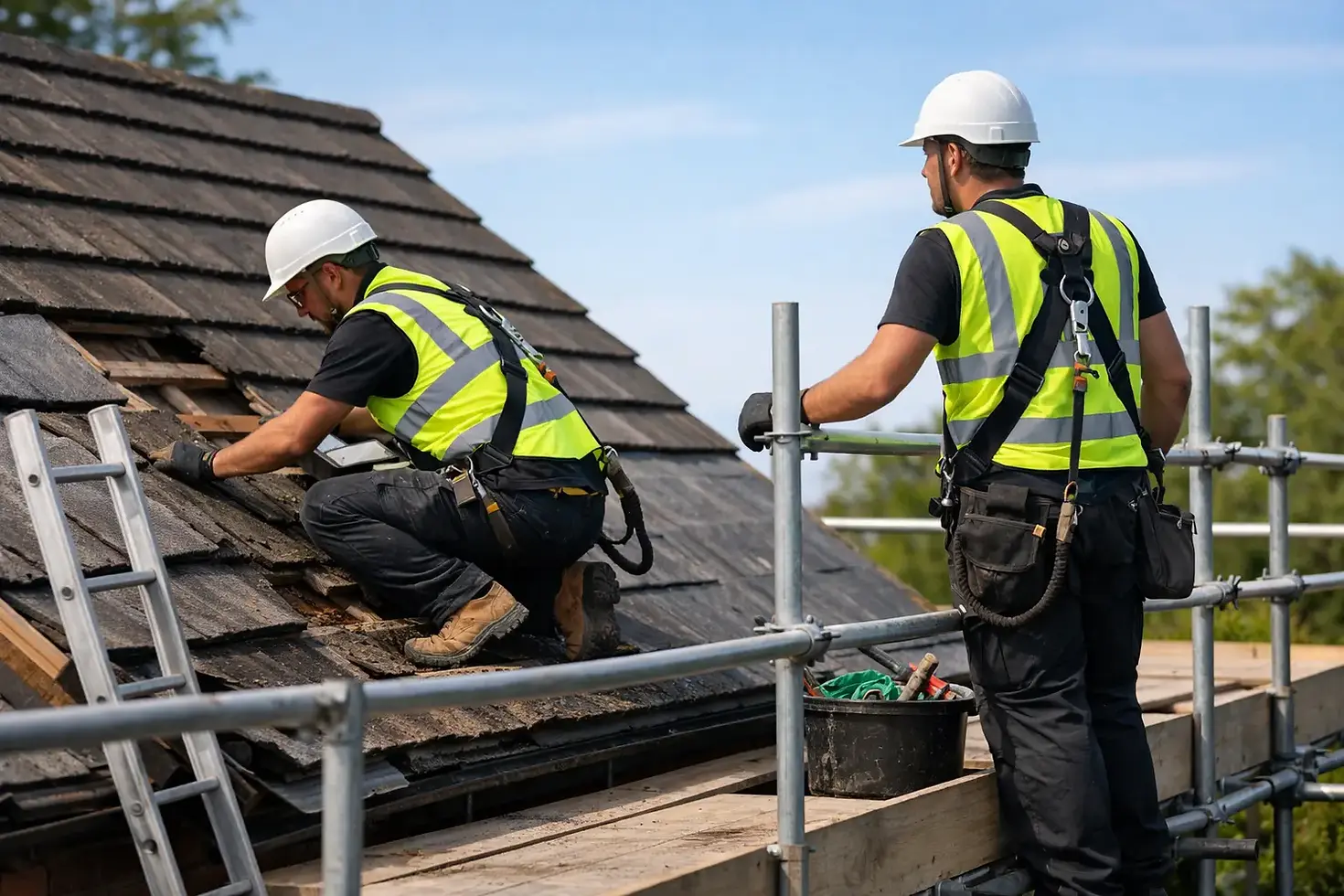
A slipped tile, damaged flashing or leaking valley can look like a small job from ground level. Once a roofer needs to work at height, carry materials or remove sections of roof covering, the access arrangement becomes a major part of doing the work properly. Scaffolding for roof repairs provides a stable working platform that helps tradespeople reach the area safely and gives property owners confidence that the job is being approached responsibly.
For homes, rental properties, commercial units and larger sites, the right scaffold is not simply a way to get up to the roof. It is a temporary structure designed around the repair, the building, the surrounding space and the people working below.
Why roof repair work often needs a scaffold
Roof work involves uneven surfaces, changing weather and a considerable risk of falling. Ladders can be suitable for a brief inspection or a genuinely minor task in the right conditions, but they are rarely the best option for repairs that require both hands, tools and replacement materials.
A properly erected scaffold gives roofers a level platform from which to work. It reduces repeated climbing, allows materials to be kept close to the repair area and creates a safer route on and off the roof. This matters when replacing several tiles, repairing chimney leadwork, renewing gutters, fixing storm damage or investigating an ongoing leak.
It also improves the quality and pace of the work. A roofer who can safely position tools and materials is able to focus on the repair rather than constantly managing an unstable access point. That can reduce disruption and help avoid delays caused by unsafe conditions.
When scaffolding for roof repairs is the right choice
The need for scaffold depends on the type of repair, roof height, pitch, access and duration of the job. There is no single arrangement that suits every property. A small repair on a low, easily accessible rear elevation may need less than extensive remedial work on a three-storey building beside a busy pavement.
Scaffold is commonly appropriate where work will last more than a short visit, where materials need lifting to roof level, or where the repair is close to an edge, chimney or awkward roof junction. It is also often needed for work on steep roofs, fragile roof coverings, larger areas of slipped or broken tiles, and jobs involving more than one operative.
Weather protection can be another consideration. If a roof needs to be opened up during unsettled conditions, a temporary roof arrangement may be required to protect the building and allow the project to continue safely. This is particularly valuable for major roof repairs, refurbishment projects and properties where water ingress could cause further internal damage.
What a well-planned roof scaffold should provide
A roof repair scaffold should be tailored to the actual task, rather than treated as a standard frame around the building. Before installation, the scaffolding contractor should consider the working height, ground conditions, roof layout, access for operatives, public safety and the space needed for materials.
The finished structure may include boarded working lifts, guardrails and toe boards to help prevent falls and stop tools or debris dropping from the platform. Safe ladder access is arranged so workers can reach the working level without climbing across unsuitable areas. Where required, loading arrangements can allow roof materials to be moved and stored safely without overloading the scaffold.
For properties close to a public footpath, road or neighbouring boundary, extra controls may be needed. This can include pedestrian protection, barriers, warning signage, lighting or local authority permits where scaffold needs to occupy public highway space. These details should be dealt with before the job starts, not left to be resolved after installation.
Protecting your property and the people around it
Roof repairs can create hazards beyond the roof itself. Loose tiles, old mortar, tools and offcuts can fall, while vehicles, garden features and entranceways may sit directly below the work area. A suitable scaffold provides a controlled perimeter and helps keep the work organised.
Property owners should also think about access to doors, paths, driveways and neighbouring homes. A good scaffold design aims to maintain practical access wherever possible, but there can be unavoidable restrictions while the repair is underway. Clear discussion at the quotation stage prevents surprises, especially where a shared driveway, narrow alleyway or business entrance is involved.
For commercial premises, planning becomes even more important. Customers, staff and deliveries may still need to move around the site, so scaffold installation must be coordinated with normal operations. On industrial and construction sites, the structure may need to work alongside other trades, plant movements and existing site safety procedures.
Why a ladder is not always the cheaper option
It is understandable to ask whether a roofer can simply use a ladder. For very short, low-risk tasks, that may be possible. However, choosing minimal access solely to reduce the upfront cost can be a false economy if it limits the quality of repair, extends labour time or creates unnecessary risk.
A ladder does not offer the same stable standing area, material storage or edge protection as a scaffold. It can also mean more time spent moving and repositioning equipment. If the work develops once damaged tiles or roof coverings are removed, a safe scaffold is already in place for the extra repair.
The best choice should be based on the work being carried out, not assumptions about how minor it appears from below. An experienced roofer and scaffolding contractor can advise on whether scaffold is proportionate to the job.
Choosing a scaffolding contractor for roof work
Roof repairs often need a quick response, particularly after high winds or water damage. Speed matters, but it should never mean cutting corners. Ask whether the contractor will assess the site, explain the proposed access arrangement and erect the structure using trained operatives.
You should also expect clear communication about installation timing, expected hire period, access requirements and any permits or restrictions that apply. The scaffold should be checked as required throughout its use, particularly if weather conditions or the scope of work changes.
JPH Scaffolding Ltd brings 17 years of operational experience to domestic, commercial and industrial access projects across Manchester, Blackburn and the wider North West. Our CITB-trained team designs each scaffold around the task, providing secure, compliant access for roofers, builders, property owners and facilities teams.
Preparing for scaffold installation
A little preparation helps installation run smoothly. Make sure the scaffolding team can reach the property and identify any gates, parked vehicles, low cables, conservatories or restricted access routes in advance. Clear movable items from the immediate working area where possible, including garden furniture, bins and fragile ornaments.
Tell the contractor about any known underground services, weak ground, basement lightwells or features that could affect the base of the scaffold. If the work affects a tenant, neighbour or business occupier, give them appropriate notice and explain how long the access structure is likely to remain in place.
Once erected, do not alter the scaffold, remove boards or use it for purposes outside the agreed work. Keep children and unauthorised people away from it, and report any impact damage or concerns promptly. The scaffold is there to make the repair safer, but it remains a working structure that must be treated with care.
A roof problem rarely improves by being left through another spell of rain or wind. Arrange professional advice early, choose access that matches the real scope of the repair, and give the roofing team a safe platform to put the job right.


Comments