_edited.jpg)
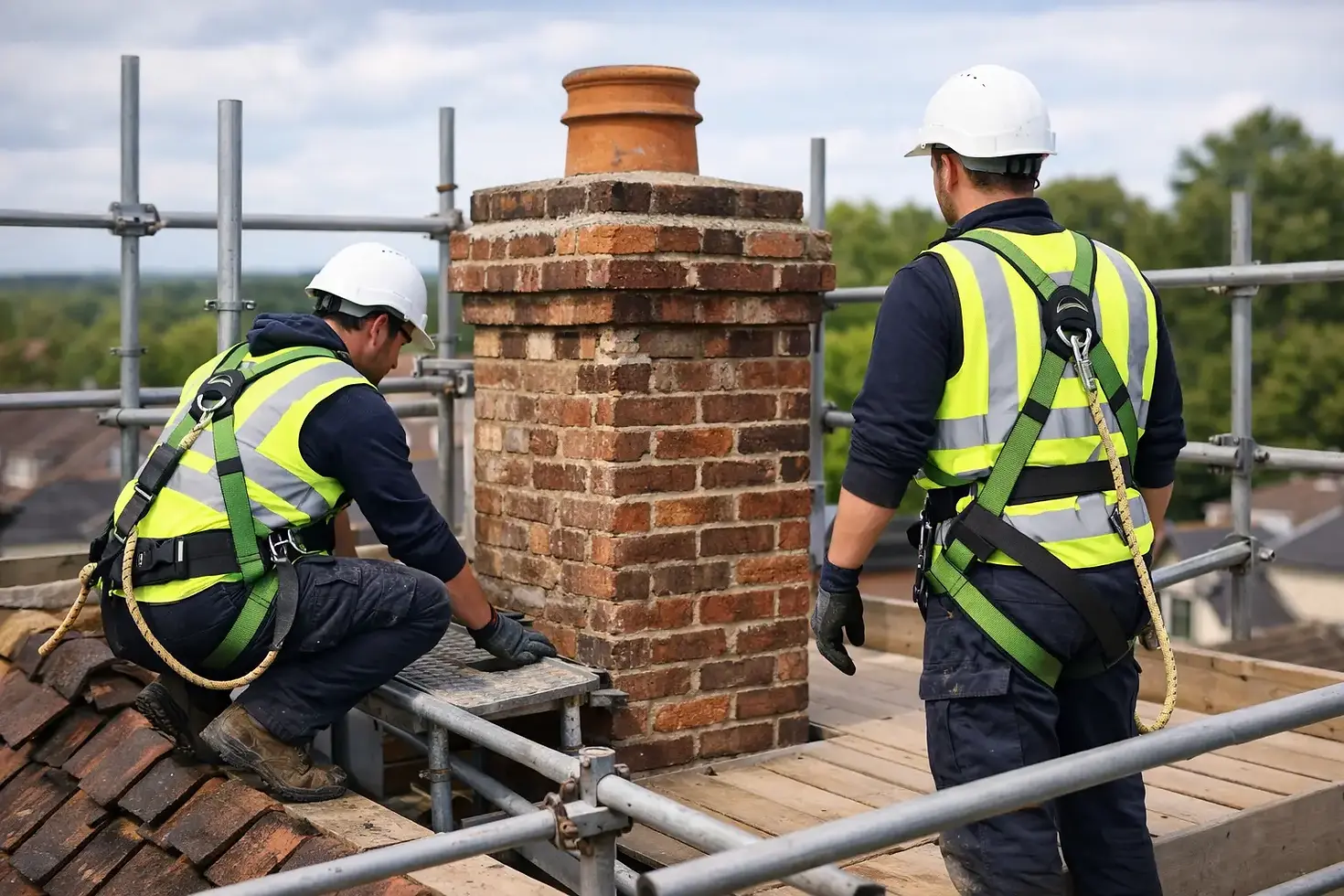
Scaffolding for Chimney Repairs Explained

A chimney may look like a small part of a property from ground level, but repairs take place in one of the most exposed and difficult areas to reach. Scaffolding for chimney repairs gives roofers, bricklayers and surveyors a stable working platform at the right height, rather than relying on ladders or working precariously from the roof slope. It protects the people carrying out the work and helps make sure the repair itself is completed properly.
Whether the issue is cracked pointing, loose pots, damaged lead flashing or a deteriorating stack, safe access should be planned before work begins. A well-designed scaffold allows tradespeople to inspect the full chimney, handle materials safely and work without being rushed by poor access.
Why chimney work needs proper access
Chimney repairs are rarely straightforward. The stack is normally above the ridge line, where wind exposure is greater and the roof below may be steep, fragile or wet. Even a modest repair can involve removing loose masonry, replacing bricks, renewing flaunching around pots, or stripping and re-fitting leadwork. These jobs require both hands, secure footing and safe space for tools and materials.
A ladder may sometimes appear to be the cheaper option, but it is not a practical substitute where prolonged or detailed work is required. It limits movement, makes carrying materials harder and gives little protection if conditions change. Access equipment needs to suit the task, not simply reach the height.
An independent scaffold built around the property provides a boarded platform close to the chimney. From there, the contractor can reach all relevant sides of the stack with greater control. Guard rails and toe boards help reduce the risk of falls and prevent small items from being kicked from the platform onto the ground below.
What a chimney repair scaffold normally includes
The exact arrangement depends on the property, roof design and scope of work. For many homes, the scaffold will rise from ground level alongside an external elevation, with a working lift positioned at chimney height. The structure is tied securely where appropriate and designed to provide safe access without placing unnecessary load on gutters, roof coverings or fragile features.
A typical arrangement may include a ladder access point within the scaffold, fully boarded working platforms, double guard rails, toe boards and brick guards or debris netting where there is a risk of materials falling. A chimney stack that needs work on several sides may need a wider platform or returns around the roof line, allowing the tradesperson to work without overreaching.
For bigger properties, commercial buildings or complex roof shapes, access may need to be more involved. A scaffold design could need to bridge over a conservatory, avoid a single-storey extension, accommodate a sloping drive, or provide protection above a public entrance. There is no one-size-fits-all chimney scaffold, which is why a site assessment matters.
Access is not the same as a working platform
This distinction is worth making. A structure that allows somebody to climb near a chimney is not automatically suitable for carrying out repairs. A proper working platform needs adequate width, edge protection and a safe route for people, tools and materials. It should also be built for the anticipated loading, especially if bricks, mortar, pots or lead are being handled at height.
The best solution is often the one that gives the repair team room to work carefully. That can reduce delays, avoid damage to the roof and lead to a better standard of finish.
Matching the scaffold to the repair
The type of chimney defect affects the scaffold requirements. Repointing, for example, may seem minor, but loose mortar usually needs to be raked out across several faces of the stack. The operative needs close, level access to the brickwork and a stable platform for mixing or receiving materials.
Replacing a chimney pot or cowl can involve lifting awkward, heavy items above roof level. The scaffold may require a suitable loading arrangement and additional planning around how materials are brought up safely. If the stack is unstable, the priority may be giving the repair team a protected position while they carefully remove damaged masonry.
Lead flashing repairs are another common reason for access. Flashing sits at the junction between the chimney and roof, so it can be difficult to inspect fully from a ladder. Scaffolding gives the roofer space to assess the condition of the lead, surrounding tiles or slates, and the mortar joints that hold the flashing in place.
It depends on the condition of the chimney and the extent of the work. A quick inspection might need limited access, while a rebuild above roof level may call for a more substantial scaffold and closer coordination with the building contractor.
Planning around your property and neighbours
Before the scaffold is erected, the contractor should consider more than the chimney itself. Access to the property, ground conditions, overhead cables, extensions, conservatories, gardens and parked vehicles can all influence the design. Clear communication at this stage helps prevent surprises on installation day.
If the scaffold needs to stand on a pavement or encroach onto a public highway, a licence may be required from the relevant local authority. This needs arranging before erection, with suitable measures such as lighting and pedestrian protection where necessary. A reputable scaffolding contractor will explain what is needed and plan the installation accordingly.
For homeowners and landlords, it is sensible to let neighbours know if scaffolders will require space near a shared boundary or if access could briefly affect a driveway. Remove vehicles, garden furniture and fragile items from the work area where requested. Small preparations make the process safer and allow the team to get on with the erection efficiently.
Safety checks throughout the job
Safety does not stop once the scaffold has been erected. The structure should be inspected by a competent person before it is first used and then checked at appropriate intervals, particularly following adverse weather or alterations. Nobody should remove boards, ties, guard rails or other components to make a task easier.
This is particularly relevant for chimney projects because work often continues through changeable North West weather. High winds, heavy rain and ice can affect conditions at roof level even when the ground feels manageable. The scaffold itself provides safer access, but the decision to work still needs to take weather and site conditions into account.
Tradespeople should also keep the platform tidy. Mortar tubs, spare bricks, tools and waste should be managed so that walkways remain clear. Debris should never be thrown from height. Where the work creates dust or falling fragments, the right containment measures can protect people, vehicles and neighbouring property below.
At JPH Scaffolding, every scaffold is designed around the access, support and safety needs of the individual job. Our CITB-trained team brings 17 years of operational experience to domestic, commercial and industrial projects, providing practical advice from the first enquiry through to dismantling.
How long should chimney scaffolding stay up?
The scaffold should remain in place for as long as the repair team needs safe access, including time for inspections, curing and finishing work. Simple repointing or flashing repairs may take only a few days once access is ready. More extensive rebuilding can take longer, particularly if poor weather interrupts masonry work or replacement materials need to be sourced.
Removing the scaffold too early can create unnecessary risk and may mean paying for it to be erected again if follow-up work is needed. On the other hand, leaving it in place longer than necessary can affect access around the property. A clear programme between the scaffolder, property owner and repair contractor helps strike the right balance.
Choosing a scaffold contractor for chimney repairs
Price matters, but it should not be the only deciding factor. Ask whether the company will assess the property, tailor the design to the work and explain any access restrictions or licensing requirements. You should also be confident that trained operatives will erect and dismantle the structure safely, and that communication will be clear if the programme changes.
For builders and roofers, reliability is equally important. A chimney repair cannot begin properly if access arrives late, and it cannot be completed safely if the platform does not suit the work. A local contractor with experience across domestic repairs and larger projects can plan around practical site demands without overcomplicating a smaller job.
If a chimney is showing signs of loose brickwork, failed pointing, staining around flashing or an unstable pot, arrange a professional inspection before the problem worsens. The right scaffold gives the repair team the safe, secure platform they need to protect your property and carry out the work with confidence.


Comments