_edited.jpg)

Solar Scaffolding for Safer Roof Installation
- Wix

- 1 day ago
- 5 min read
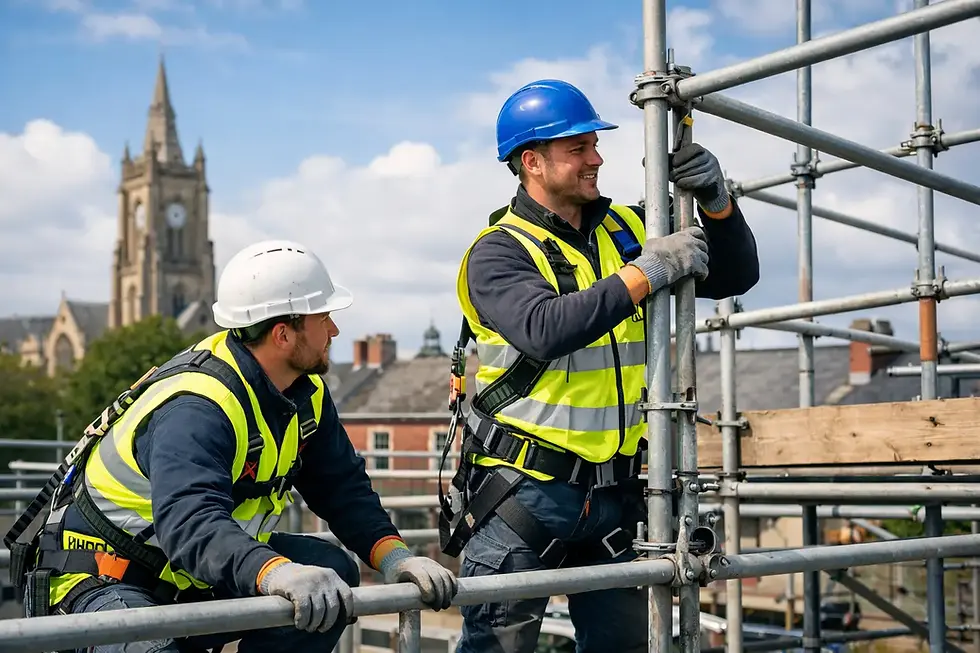
A solar panel installation can look straightforward from the ground, but most of the work takes place at height, on a sloping and often fragile roof surface. Solar scaffolding provides the secure working platform installers need to move materials, fit mounting systems and complete electrical work without relying on ladders or unsafe roof access.
For homeowners, landlords, solar installers and commercial project managers, the scaffold is not simply an extra item on the quote. It is a key part of planning a safe, efficient installation. The right structure gives the installation team room to work properly, protects people below and helps keep the programme moving when materials and weather conditions need careful management.
When is solar scaffolding needed?
Scaffolding is commonly required for solar installations on pitched roofs, particularly where panels are being fitted across a large roof area or work is taking place above a conservatory, extension, public footpath or restricted access area. A properly designed scaffold creates a stable perimeter working platform around the roofline, often with edge protection to reduce fall risk.
The exact requirement depends on the property and the planned installation. A single-storey bungalow with clear access presents a different challenge from a three-storey town house, a listed building or a commercial unit with multiple roof levels. Roof pitch, eaves height, ground conditions, panel location and the route for lifting materials all affect the scaffold design.
A reputable solar installer will assess access before work begins. Where scaffolding is needed, arranging it early prevents last-minute delays and avoids asking installation teams to work from inadequate access equipment. It also gives the scaffolder time to identify practical issues, such as a narrow driveway, a shared access route, uneven ground or overhead obstructions.
What a solar scaffold should provide
Solar work needs more than a basic platform at eaves level. Installers must be able to reach the roof safely, carry out detailed fixing work and handle panels carefully. The structure should therefore be designed around the work being completed, not simply erected to a standard shape.
A typical solar scaffold may include a boarded working lift, edge protection, safe ladder access and toe boards. On some projects, a loading bay or lifting arrangement is useful for bringing solar panels and mounting equipment up to roof level without carrying them through the property or attempting unsafe manual handling from a ladder.
For larger commercial installations, the solution may need to cover longer elevations, accommodate several access points or work around operating premises. Industrial sites may also require closer coordination with site rules, vehicle routes, restricted zones and other contractors. The principle remains the same: provide safe access without creating unnecessary obstruction or risk.
Access for people and materials
Solar panels are awkward to handle at height. They are large, relatively lightweight and vulnerable to damage if knocked against guttering, walls or scaffold tubes. A planned material route helps installers work more efficiently and reduces the chance of rushed lifting.
The safest approach is not always the biggest scaffold. On a compact domestic job, a well-positioned platform and appropriate access can be all that is required. On a larger roof, additional working space may save time and make handling safer. A site survey allows the design to match the installation rather than forcing the project into a one-size-fits-all arrangement.
Protection for the property and the public
Good solar scaffolding also considers what is below the work area. This may include a driveway, garden, entrance, pavement, neighbouring land or a business entrance. Where access needs to be maintained, the scaffold layout should account for it from the outset.
Protective measures may be needed to control the work area and keep people clear while panels, tools and materials are moved. The scaffold must be erected on suitable ground, tied correctly where required and checked throughout the hire period. These details are what turn a temporary structure into reliable site access.
Why ladders are rarely enough for solar work
A ladder can be suitable for short, low-risk tasks in the right conditions, but it is not normally the right working position for fitting a solar array. Panel installation involves repeated movement, careful alignment, drilling, fixing brackets and handling materials across a roof. These activities need stability, room and proper fall protection.
Working from a scaffold gives installers a safer base before they step onto the roof and a protected area to return to while tools or materials are being managed. It can also make it easier to inspect the roof edge, guttering and surrounding condition before the installation starts.
For the client, this means fewer compromises. A scaffold allows the solar team to concentrate on the quality of the installation rather than making do with limited access. It may add an upfront cost, but it can reduce delays, protect the workforce and help avoid damage caused by unsuitable access arrangements.
Planning solar scaffolding around your property
The best time to discuss scaffolding is when the solar survey is being arranged, not after an installation date has been fixed. Clear communication between the property owner, solar installer and scaffolding contractor helps prevent avoidable changes on the day.
Before erection, the scaffolding team should understand which roof faces will be used, where the panels are going, how long the work is expected to take and whether other trades are attending. It is also useful to identify gates, garages, parking spaces, drains, conservatories and any areas that must remain accessible.
If the property is on a busy road or the scaffold will affect a pavement, additional permissions or traffic management may be necessary. This should be identified early, as it can affect lead times and the final layout. Similarly, commercial premises may need erection outside trading hours or coordinated around deliveries and staff access.
Weather is another practical consideration. Solar installation is affected by high winds, rain and icy surfaces, while scaffold erection and inspection must also be managed safely. A realistic programme leaves room for changing conditions rather than encouraging unsafe pressure to finish on a particular day.
Choosing a scaffolding contractor for a solar project
Price matters, but a low quote does not tell you whether the scaffold is suitable for the work. Ask whether the contractor has considered roof access, edge protection, material handling and the practical needs of the solar installation team. You should also expect clear information about the erection date, hire period, inspection arrangements and removal once the work is complete.
Look for a contractor with trained operatives, a strong safety record and experience across domestic and commercial access projects. A contractor should be willing to visit where needed, explain the proposed layout in plain English and adapt the design if site conditions change. Reliable communication is especially valuable when several contractors are working to the same installation date.
JPH Scaffolding Ltd provides tailored access solutions for solar projects across Manchester, Blackburn and the wider North West, drawing on 17 years of operational experience and CITB-trained teams. Whether the job is a domestic rooftop array or a larger commercial programme, the focus is on secure, fit-for-purpose access and a straightforward service from quote to removal.
Keeping the installation on schedule
Once erected, the scaffold should be treated as an active part of the site, not something to forget until collection. Keep access points clear, do not alter boards or guardrails, and report any damage or concern immediately. Only authorised, competent people should make changes to the structure.
It is also sensible to agree the removal timing before the installation starts. Solar work can include follow-on electrical commissioning, roof checks or final inspections, so taking the scaffold down too early can create another access problem. Equally, prompt removal once the work is genuinely complete keeps the property clear and avoids unnecessary hire time.
A well-planned scaffold gives a solar project the safe working foundation it needs. Discuss access at the start, choose a contractor that understands the installation, and give the work the secure platform it deserves.


Comments